
A better orthotic path for the patients you see every day
Condition-specific GoMFO® orthotics with FootID™ Technology. No casting, no lab coordination, no return visits.

Built on KevinRoot Medical fabrication science since the 1950s.
GoMFO® vs. traditional delivery
From your diagnosis to their door.
Document the diagnosis
Plantar fasciitis, metatarsalgia, PTTD, neuroma, sesamoiditis, and 15 more. Hand the patient a referral card pointing them to GoMFO®.
Patient selects condition and shoe type
Diagnosis-specific modifications are pre-matched. Patient selects from a curated shoe type list — lab optimizes accordingly.
AI-guided photo measurement
Patient photographs each foot against a paper reference. The system extracts heel geometry, arch height, and metatarsal head span.
In-office option: staff completes capture in under 5 minutes.Lab fabrication
KevinRoot Medical fabrication protocols applied to patient anatomy and ICD-10 diagnosis.
Direct-to-patient delivery
Ships in 5–7 business days. No return visit. No follow-up required from you.
Everything your practice needs to refer patients. At no cost.
Free to verified clinicians. NPI validation confirms delivery to a clinical address.
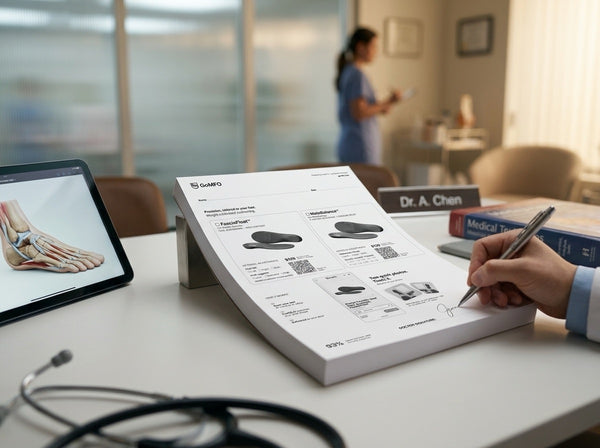
Prescription Pad
50-sheet tear-off pads. Condition checkboxes, QR code, space for practice name and NPI.
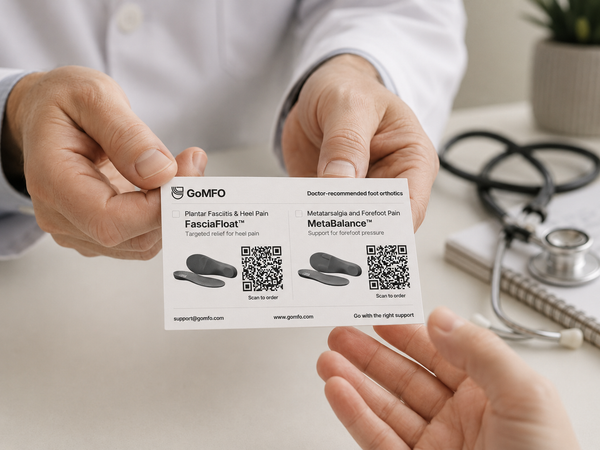
Patient Referral Cards
Credit-card sized, 50 per pack. QR code on reverse. Plain language for patients.
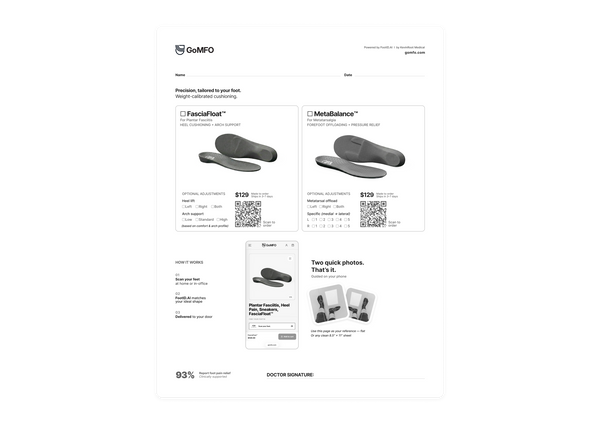
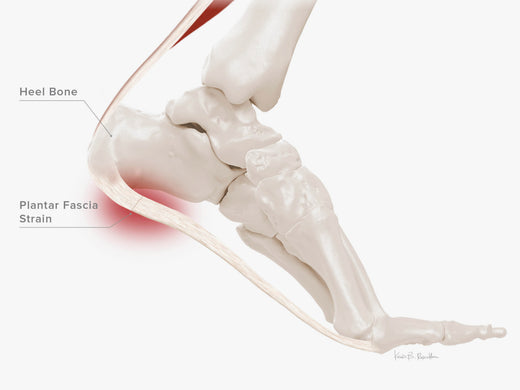
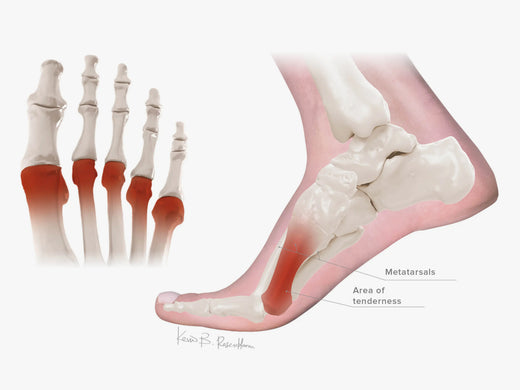
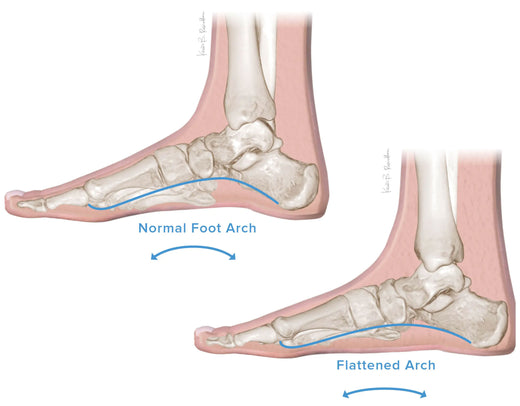
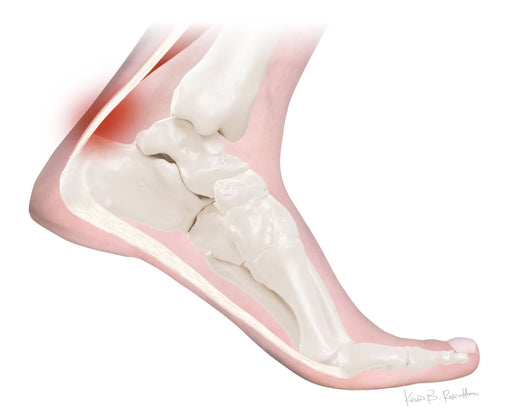
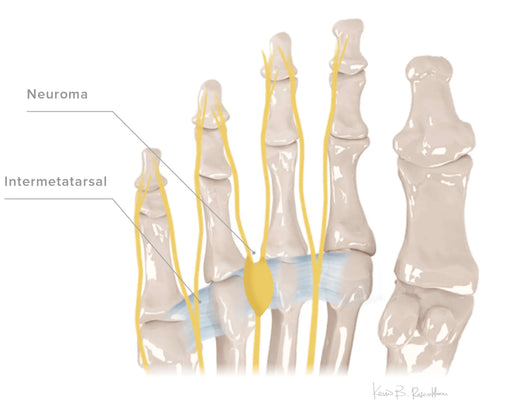
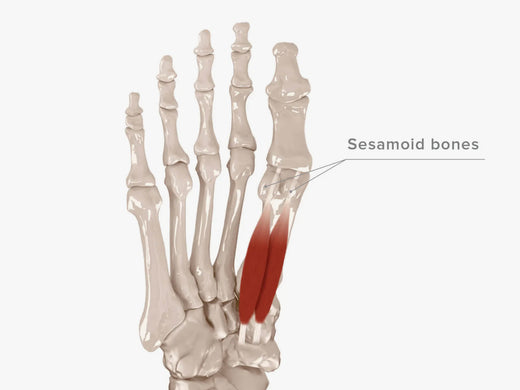
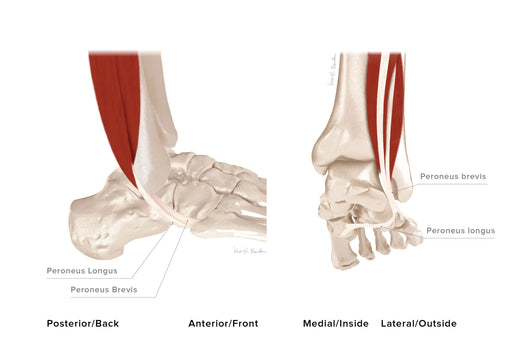
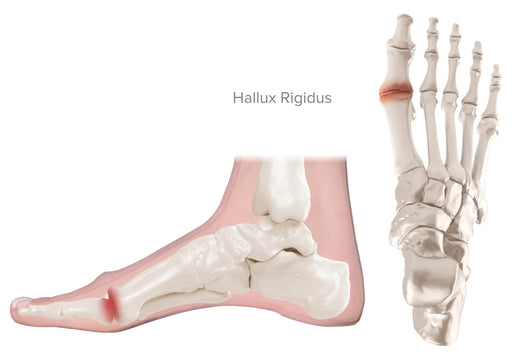
Specific modifications for 20 conditions
Each GoMFO® orthotic is prescribed by diagnosis, with modification protocols matched to the specific condition.
Backed by real clinical expertise
GoMFO®'s protocols are developed with and validated by practicing clinicians.
The biomechanical protocols behind GoMFO® are grounded in Root theory — the same clinical science I've relied on for decades. For patients who need precise orthotic intervention without the wait or cost of an L3000 device, this fills a genuine gap in the care continuum.
Most patients with common foot pathologies never reach a specialist. GoMFO® gives any clinician a clinical option to offer — not a product, but a prescription process backed by real orthotic science. I recommend it to patients who wouldn't otherwise access proper orthotic care.
Real doctors who spent their careers on this
Foot orthotics are not guesswork. They're based on years of research by doctors who studied exactly how feet work, how they get hurt, and how the right kind of support helps them heal.
Questions we hear from practices
Answers to the questions most clinicians ask before referring their first patient.
GoMFO®'s AI extracts heel cup geometry, arch height, and metatarsal head span from standardized smartphone photos — the same three variables captured in neutral suspension casting. For the 80–90% of pathological foot pain cases that respond well to a correctly modified orthotic, the photo-based process is clinically sufficient.
Your role is to document the diagnosis. GoMFO® executes the corresponding orthotic modification. Analogous to recommending a night splint brand — you are not fabricating or warranting the device. Consult your malpractice carrier for jurisdiction-specific guidance on referral liability.
In virtually all cases, no. GoMFO® serves patients who won't pursue an L3000 device due to cost, lack of coverage, or access barriers. For complex cases requiring full biomechanical workup, your L3000 remains the appropriate standard.
Staff can complete photo capture during the visit — two sheets of standard paper, patient stands barefoot, plantar and medial profile photos. Under 5 minutes, no equipment required. The ordering process also works on desktop or tablet.
GoMFO® is appropriate for primary presentations without significant structural deformity. Escalate for severely compromised biomechanics, surgical follow-up, pediatric conditions, neurological complications, or when conservative care fails.
The research behind each modification
Citations are representative, not exhaustive. Full bibliography available on request. Verify via PubMed or institutional access.
Ready to start referring patients?
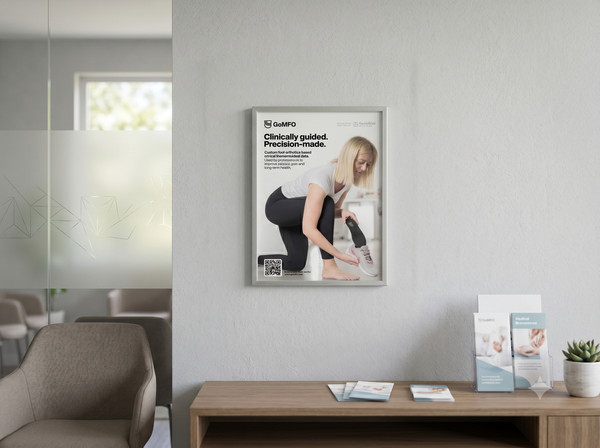
Order free prescription pads, referral cards, and patient pamphlets — shipped to your clinic at no cost.